Tucked away in the hills north-east of Kathmandu, Ama Yangri offers one of the most accessible yet rewarding trekking experiences in Nepal. If you’re looking for a short getaway from the Kathmandu Valley — filled with Himalayan panoramas, peaceful forest trails, and cultural immersion — Ama Yangri delivers. This blog explores the trek in full detail: where it is, how to get there, what you’ll see, how hard it is, and how to plan it best.
Ama Yangri Trek is one of Nepal’s most accessible yet spiritually powerful short treks. Located in the heart of the Helambu region of Sindupalchok, this scenic journey leads to the sacred summit of Ama Yangri (3,800 m)—a revered Buddhist peak known as the “Protector Goddess of the Helambu Valley.” Despite its proximity to Kathmandu, the trek offers sweeping Himalayan panoramas, serene villages, Buddhist monasteries, and pristine natural beauty.
For trekkers seeking a short Himalayan escape without heavy crowding, technical difficulty, or long travel time, Ama Yangri is an outstanding choice.
Overview of Ama Yangri Trek
- Region: Helambu, Sindhupalchok District
- Duration: 2–4 days
- Max Elevation: Ama Yangri Peak – approx. 3,800 m
- Difficulty: Moderate
- Accommodation: Teahouses, homestays, lodges
- Best Season: Spring (Mar–May) & Autumn (Sept–Nov)
- Start Point: Melamchi / Tarkegyang
- Highlights: Panoramic Himalayan views, Buddhist culture, peaceful forests
The trek is ideal for beginners, families, and trekkers with limited time—but still satisfying for experienced hikers seeking a short high-altitude adventure. Ama Yangri is a “weekend Himalayan escape” — accessible, manageable, and richly rewarding.
When to Trek: Best Seasons & What to Expect
Best seasons
-
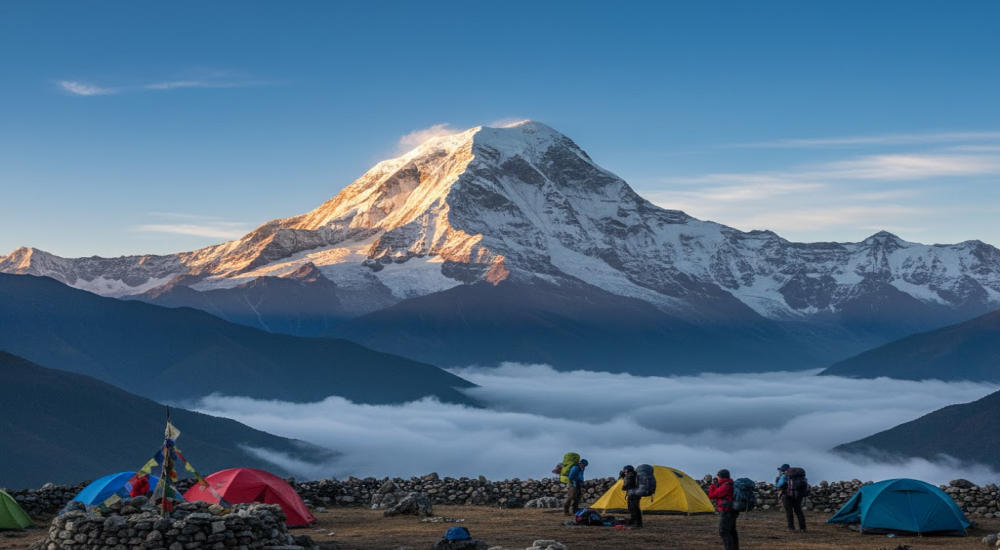
Autumn (September – November) — After the monsoon, skies clear up, mountain views are crisp, and walking conditions are ideal.
-
Spring (March – May) — Offers pleasant weather and blooming rhododendrons, adding vivid colors to the landscape.
Winter (December–February) is also possible — with snow, clear air, and fewer crowds — but mornings and nights get cold.
Avoid monsoon months (June–July): Slippery trails and poor visibility make the trek less enjoyable.
What the seasons look like
- Autumn: clear skies, stable weather, lush hillsides, great visibility — ideal for summit views.
- Spring: fresh greenery, blooming forests, mild temperatures — lovely and vibrant.
- Winter: crisp air, possible snow on higher parts, tranquil trails, but cold temperatures especially at night.
Trek Itinerary & Route — Typical 2–3 Day Trek
Here’s a common itinerary preferred by many travellers doing Ama Yangri when pressed for time:
| Day | Plan / Route |
|---|---|
| Day 1 | Drive from Kathmandu to Tarkeghyang — the gateway village (approx. 5–7 hours drive via Melamchi/Timbu). Overnight stay at a local teahouse. |
| Day 2 | Early morning hike from Tarkeghyang to Ama Yangri Peak (3,771 m) — usually 5–6 hours for ascent and similar for descent back to Tarkeghyang or nearby base. Enjoy panoramic Himalayan views (Langtang, Ganesh Himal, Gaurishankar, possibly even farther peaks). Return for overnight stay. |
| Day 3 | Drive back to Kathmandu from Tarkeghyang (or via Timbu/Melamchi). End of trek. |
Many guides advertise this as a 2–3-day trek — quick enough for a weekend escape.
Sample Itinerary (3-Day Version)
Day 0 (Evening before): Prepare gear, secure permit, arrange transportation.
Day 1: Kathmandu → Tarkeghyang (by bus or jeep) → overnight stay in local teahouse.
Day 2: Early morning hike to Ama Yangri Peak → sunrise/summit + panoramic Himalayan view → descent back to Tarkeghyang → evening rest, local dinner, starry skies.
Day 3: Return drive to Kathmandu → arrive afternoon/evening; rest or explore city.
Alternative 4-Day Version: If you prefer slower pace — add an extra day to explore villages, nearby hamlets, or local monasteries; or buffer for weather/road delays.
What You’ll See & Experience — Nature, Culture, Himalayas
Mountain Views & Natural Beauty
-
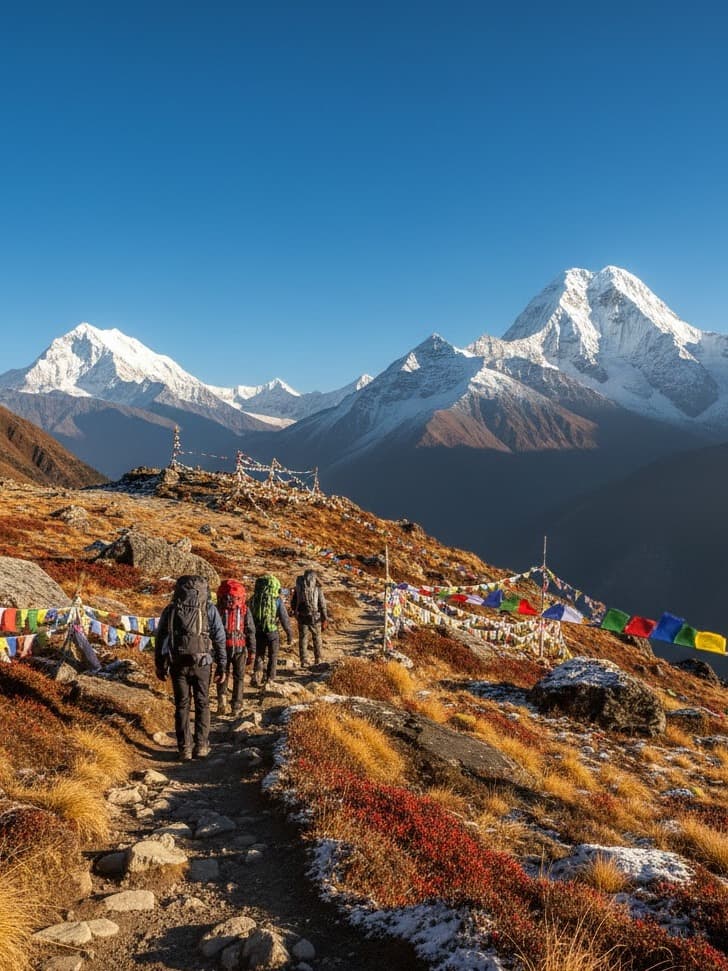
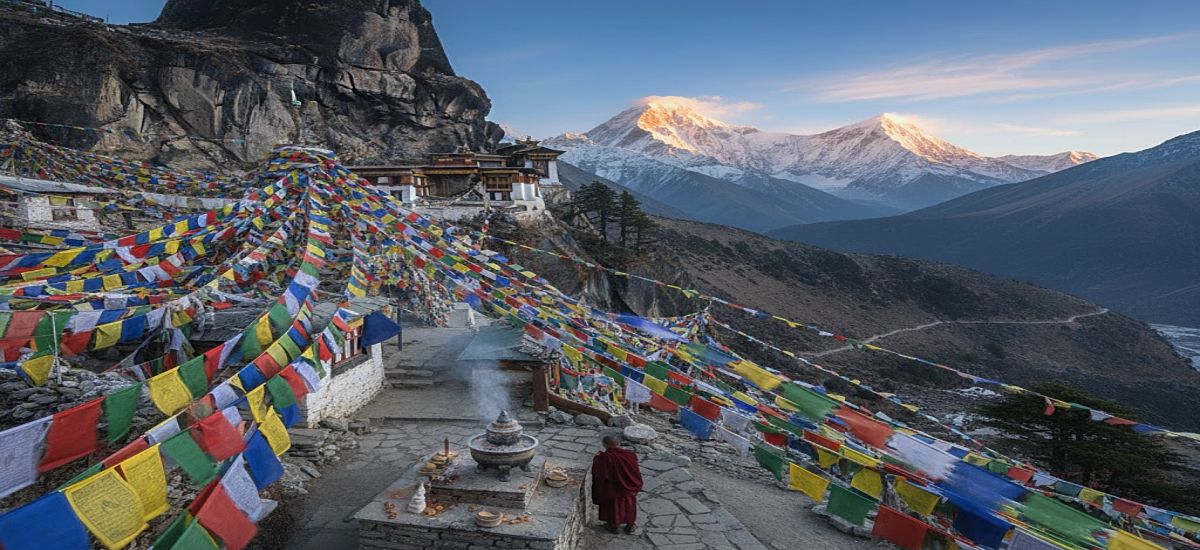
From the summit of Ama Yangri Peak — you get 360° panoramic views of Himalayan ranges including Langtang Himalayas, Ganesh Himal, Gaurishankar Himal, and other snow-capped peaks.
-
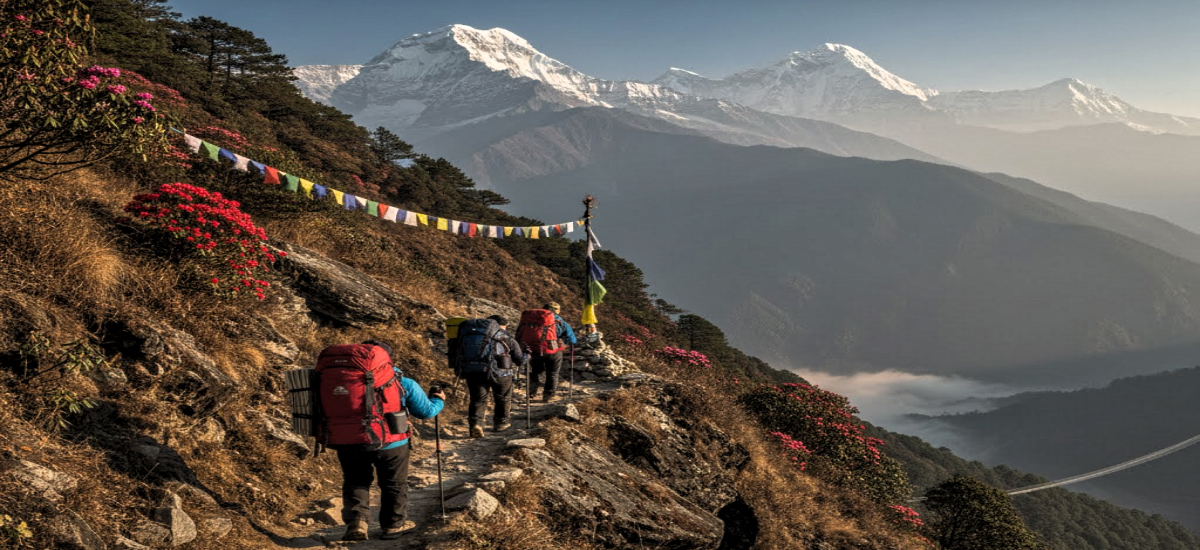
The trail meanders through rhododendron, pine, and oak forests, charming lower-hills vegetation, beautiful meadows and valleys — especially alive in spring and autumn.
Culture & Village Life
-
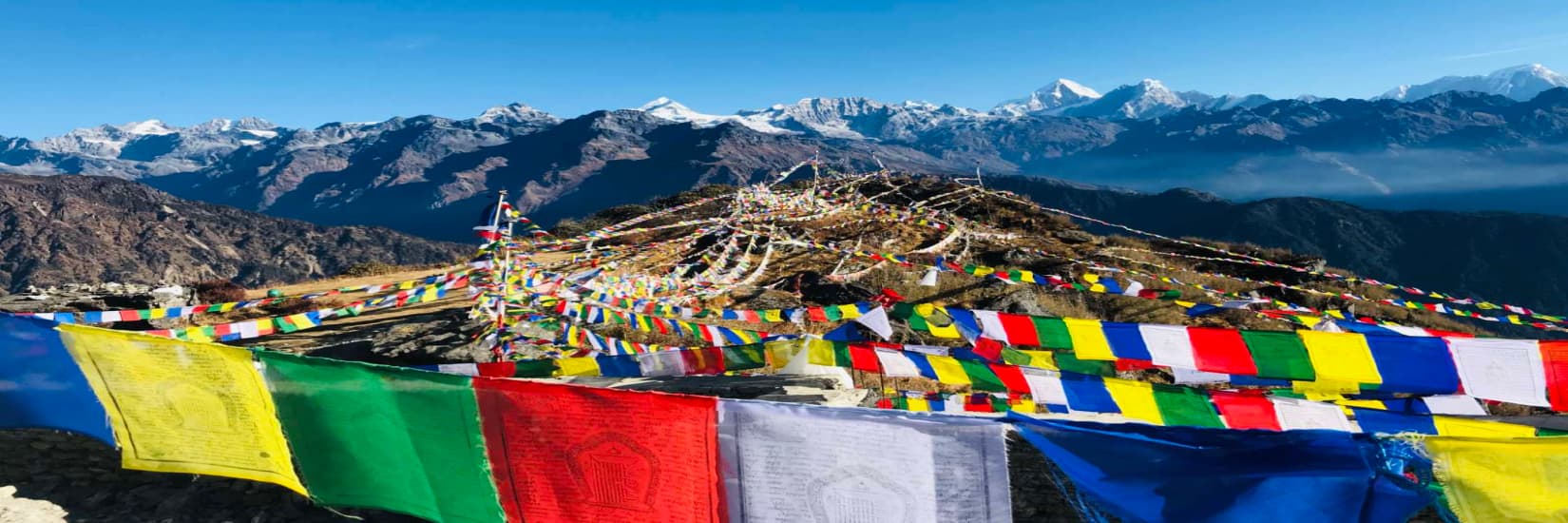
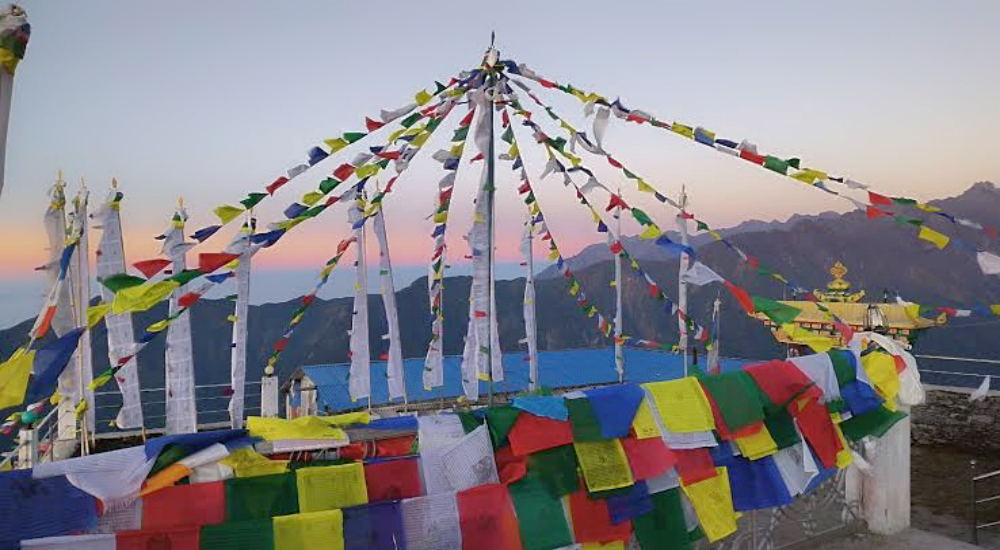
The trek passes through villages inhabited by Sherpa, Tamang, Chhetri (and Hyolmo) communities, offering insight into local Himalayan culture, traditional houses, monasteries or gompas, mani walls, prayer flags, and community hospitality.
-
Staying in local teahouses / lodges — often basic but with local warmth, home-cooked meals (dal-bhat, Tibetan bread/momos, local tea), and an opportunity to connect with villagers.
Peace, Accessibility & Weekend-Trip Appeal
-
Proximity to Kathmandu (just a few hours away) makes this trek perfect for a short Himalayan escape for weekenders, busy travellers, or first-time trekkers.
-
Relatively lower altitude and manageable physical demands make it accessible without heavy acclimatization or extensive trekking gear — though preparation is still advised.
Difficulty & Who Should Do It
Level: Easy to Moderate. The beginning of the trek is straightforward, but the final ascent to the peak involves steeper climbs; some trail sections may feel steep, especially the summit push.
Fitness & Skills:
-
Basic fitness is sufficient.
-
Some prior hiking experience helps, but is not mandatory.
-
Good trekking boots (grippy soles), basic layering clothes, water, snacks — recommended.
Altitude Sickness Risk: Because the maximum altitude is ~ 3,771 m — which is relatively modest — the risk of serious altitude sickness is low. However, as the ascent from Kathmandu (1,400 m) involves a substantial elevation gain (~2,300 m), it’s wise to ascend slowly, hydrate, and monitor for symptoms.
Who Should Do It:
-
First-time trekkers wanting a Himalayan experience without committing to long months.
-
Weekend travellers based in Kathmandu.
-
Families or small groups with limited time.
-
People wanting a quick culture + nature + mountain-view combination.
Costs, Permits & Practical Details
Permits
-
Foreign trekkers need entry permit for Langtang National Park (or relevant protected area permit) + TIMS card.
Approximate Costs
-
Local bus from Kathmandu to Tarkeghyang: around NPR 650 (as of 2025).
-
Jeep (private) from Kathmandu / Melamchi to base area: costs vary (depends on group size and season).
-
Accommodation & food: basic teahouses / lodges — modest but sufficient for a comfortable stay.
What to Pack / Prepare
-
Trekking boots with good grip (trail may be slippery especially if wet).
-
Layered clothing: weather can shift quickly; evenings can be chilly at base.
-
Water bottle + purification (boiled/filtered water available at lodges).
-
Basic first-aid kit, snacks, energy food (nuts, dry fruits), walking stick (optional but helpful for steep sections).
-
Permits (Langtang NP entry, TIMS) — easier if arranged through a trekking agency.
Why Ama Yangri Trek is a Hidden Gem — My Perspective
-
Close to Kathmandu, yet Himalayan feel. For someone living or visiting Kathmandu (like you might), Ama Yangri stands out as a perfect short-escape: not too far, not too demanding, but still offering the majesty of the Himalayas.
-
Blends nature + culture + accessibility. You get forests, peaks, local villages, Buddhist-Himalayan culture, all within a compact itinerary.
-
Ideal for beginners & busy travellers. Whether you’re short on time, or new to trekking, Ama Yangri doesn’t demand the same investment (time / physical preparedness) as longer Himalayan treks.
-
Flexibility & affordability. Cost is low compared to long treks; logistical demands are modest; local teahouses provide basic but adequate comforts — good for budget travellers, Nepali citizens, or international tourists looking for a quick Himalayan taste.
Who Should Choose Ama Yangri — And Who Should Think Twice
Good For:
-
First-time trekkers.
-
Travellers on short holidays/weekends.
-
Families or friends seeking modest adventure.
-
Visitors wanting a taste of Himalayan views without long expeditions.
-
People living in or near Kathmandu who want quick access to mountains.
Maybe Not For:
-
Trekkers seeking high-altitude challenge or multi-week expeditions.
-
Those expecting “luxury” accommodations — teahouses are simple, sometimes basic.
-
People wanting extensive trekking experience, trekking beyond modest altitude or distances.
Conclusion
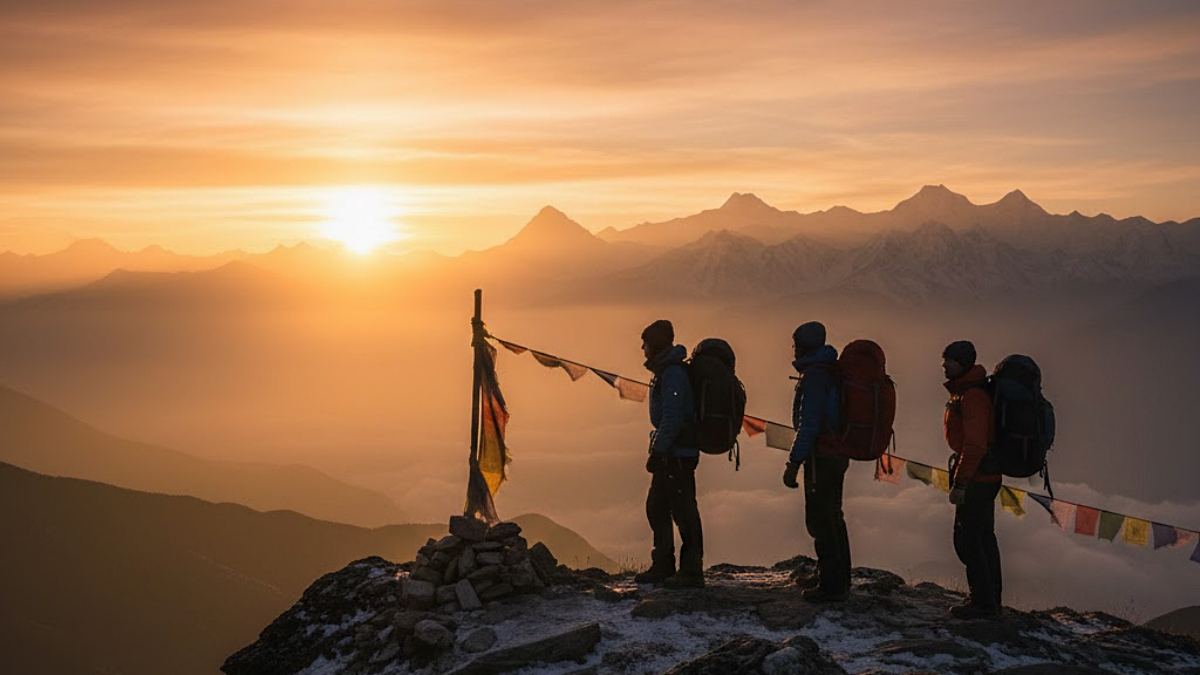
Ama Yangri Trek stands out as a hidden gem among Nepal’s Himalayan treks — offering a potent mix of accessibility, beauty, culture, and affordability. For those seeking a quick yet meaningful Himalayan escape from Kathmandu, this trek delivers a fulfilling experience: forest trails, Himalayan peaks, sunrise/sunset vistas, local hospitality, and a spiritual-cultural ambiance.
If you’re pressed for time but longing for mountain air and Himalayan horizons — Ama Yangri may be the perfect trek for you.
If you need any further information, please contact us by email: [email protected], Phone: +977- 980 195 6248 (WhatsApp).